
Fort Collins RV owners face a simple problem. The city limits street parking for recreational vehicles to 24 hours for loading and unloading. Most HOAs ban RVs from driveways entirely. That leaves off-site storage as the only practical option for Class A motorhomes, travel trailers, fifth wheels, boats, and oversized equipment.
This guide breaks down every storage type available in the Fort Collins area, what each one costs, and how to pick the right fit for your rig. If you need a quick quote on container rentals in Fort Collins, we can help with that too.
Fort Collins Parking Rules Force Most RV Owners Off-Site
Fort Collins municipal code restricts RV and trailer parking on residential streets to 24 hours. That window covers loading and unloading only. Overnight parking at commercial lots like Walmart is also enforced in Fort Collins, unlike neighboring Loveland where enforcement is looser.
HOA covenants add another layer. Many subdivisions in Fort Collins, including communities near Fossil Creek, Rigden Farm, and Timberline, prohibit any visible RV, trailer, or motorhome on the property. Some allow storage behind a solid fence, but most require the vehicle to be off-site.
Colorado state law caps combined vehicle and trailer length at 70 feet. Width cannot exceed 8.5 feet. Height tops out at 14.5 feet. These dimensions matter when you are shopping for a storage spot because not every facility can handle a full-size Class A or a 40-foot fifth wheel.
Bottom line: if you own an RV in Fort Collins, you almost certainly need dedicated storage.
Types of RV and Equipment Storage in Fort Collins
Four main options exist in the Northern Colorado market. Each trades off cost, protection, and access differently.
Open Outdoor Lots
An open lot is a flat parking space on gravel or pavement with no roof or walls. This is the cheapest option. Expect to pay $30 to $60 per month in the Fort Collins area depending on the size of the space.
Open lots work for seasonal storage of travel trailers, utility trailers, and construction equipment that can handle weather exposure. The downside is real. Colorado’s Front Range delivers hail, intense UV, heavy snow, and wind. A good RV cover helps, but it does not solve everything.
Covered Outdoor Storage
Covered storage adds a roof structure over the parking space. This blocks direct sun, hail, and most snow accumulation. Pricing in Fort Collins runs $50 to $120 per month depending on the height clearance and length of the space.
Covered spots work well for boats, RVs with awnings or rooftop AC units, and equipment with hydraulics or electronics that degrade in direct sun.
Indoor and Enclosed Storage
Enclosed storage means a warehouse-style building or a dedicated drive-in unit with a roll-up door. This is the highest level of protection. Pricing ranges from $100 to $250 per month in the Fort Collins market.
Indoor storage makes sense for high-value Class A motorhomes, custom-wrapped vehicles, vintage trailers, and sensitive equipment. Climate-controlled options are available at some facilities between Fort Collins and Loveland along US-287.
Portable Storage Containers
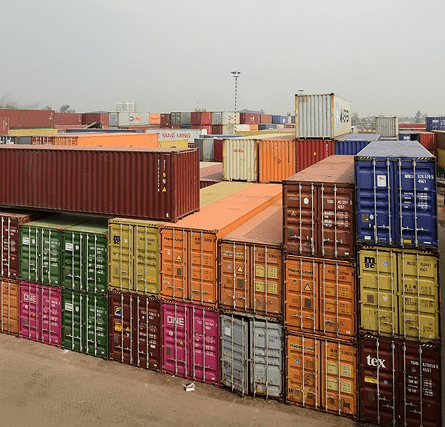
This is the option most people overlook. A 20-foot or 40-foot shipping container on your own property or job site works as secure, lockable equipment storage without a monthly facility fee beyond the rental itself.
Fort Collins Mobile Storage delivers 20-foot and 40-foot storage container rentals directly to your location. A 40-foot container fits ATVs, snowmobiles, landscaping trailers, and seasonal gear with room to spare. Contractors across Northern Colorado use 48-foot and 53-foot semi trailers as mobile warehouses on active job sites.
Containers do not replace an RV parking space. They replace the overflow problem. Camping gear, tools, off-season accessories, spare tires, and maintenance supplies all go in the container so your RV storage spot stays just for the RV.
What to Look for in a Fort Collins Storage Provider
Not all storage is equal. These factors separate a good experience from a headache.
- Access hours. Some facilities lock gates at 5 PM. If you need to pull your trailer out at 6 AM for a weekend trip to Horsetooth Reservoir or Rocky Mountain National Park, 24/7 access matters.
- Security. Look for perimeter fencing, security cameras, gated entry, and on-site management. A 4-foot berm alone is not enough for high-value equipment.
- Surface condition. Gravel lots drain better than dirt in spring. Paved lots prevent sinking. Ask before you commit.
- Maneuverability. Backing a 35-foot fifth wheel into a tight space is miserable. Wide drive aisles and pull-through spots save time and paint.
- Month-to-month terms. Avoid long-term contracts unless the discount is significant. Seasonal storage needs shift. Flexible terms from local operators like Fort Collins Mobile Storage beat rigid commitments.
- Proximity. A storage lot 30 minutes away means you will use your RV less. Facilities near I-25 and US-287 serve most of Northern Colorado, from Wellington to Loveland to Windsor and Timnath.
Preparing Your RV or Equipment for Storage in Colorado
Colorado weather is hard on anything left sitting. These steps prevent the most common damage.
For RVs and travel trailers:
- Drain all water tanks and water lines. Freeze damage cracks pipes and fittings in Fort Collins winters where temps drop below zero.
- Empty and clean the refrigerator, microwave, and any food storage. Mice are active in Northern Colorado storage lots from October through April.
- Disconnect batteries and bring them home to trickle charge. A dead battery in January means a dead trip in May.
- Seal exterior gaps with steel wool or expanding foam. Rodents enter through openings as small as a quarter.
- Check tire pressure and consider tire covers. UV at 5,000 feet elevation degrades rubber faster than at sea level.
- Invest in a quality RV cover if storing outdoors. Cheap tarps trap moisture and scratch paint.
For boats and equipment:
- Fog the engine or run fuel stabilizer through the system.
- Grease all moving parts and hydraulic fittings.
- Remove valuables, electronics, and registration documents.
- Cover exhaust openings and air intakes to keep critters out.
When a Portable Container Makes More Sense Than a Storage Lot
A storage lot is the default answer for the RV itself. But for everything else, a container rental is often cheaper and more convenient.
Think about the stuff that piles up around an RV: camp chairs, awning accessories, leveling blocks, outdoor kitchen gear, bikes, kayak racks, hoses, extension cords, toolboxes. Most RV owners either cram it into the garage or haul it back and forth every trip.
A storage container on your property solves that. You load it once. It stays organized. You grab what you need before a trip and put it back after.
Contractors in the Fort Collins area face the same math with equipment. A skid steer attachment, generator, scaffolding, or seasonal inventory needs somewhere to go between jobs. A 40-foot side-open container lets you load wide items with a forklift from the side instead of the end, which saves time on job sites where space is tight.
Frequently Asked Questions
How much does RV storage cost in Fort Collins?
Open outdoor lots start around $30 to $60 per month. Covered spots run $50 to $120. Enclosed or indoor units range from $100 to $250 per month. The price depends on the length of your vehicle, type of surface, and security features at the facility. Larger rigs like Class A motorhomes and 40-foot fifth wheels sit at the higher end of each range.
Can I park my RV on the street in Fort Collins?
Only for 24 hours, and only for active loading or unloading. Fort Collins municipal code does not allow extended RV or trailer parking on residential streets. The city enforces this, and fines apply. Check with your specific HOA for additional restrictions on driveway and side-yard storage.
What size storage container fits RV gear and equipment?
A 20-foot container holds roughly the equivalent of a one-car garage. That fits seasonal camping gear, tools, bikes, and accessories. A 40-foot container doubles the space and works for contractors storing equipment, inventory, or materials alongside recreational gear.
Is covered RV storage worth the extra cost in Fort Collins?
Colorado hail is the main reason to consider it. The Front Range averages multiple hail events per year, and a single storm can cause thousands of dollars in damage to an unprotected RV roof, awning, and sidewalls. If your RV is worth more than $20,000, covered storage usually pays for itself.
How do I prepare my RV for winter storage in Northern Colorado?
Drain all water systems, disconnect batteries, seal gaps against rodents, check tire pressure, and cover the exterior. Fort Collins sits at roughly 5,000 feet, so UV exposure is stronger than lower elevations. That means rubber, paint, and plastic degrade faster without protection.
Does Fort Collins Mobile Storage offer RV parking?
Yes. Fort Collins Mobile Storage operates a secure outdoor storage facility near Terry Lake and Highway 287. The lot includes a 6-foot solid fence, 3-strand security wire, and an on-site manager during business hours. We also deliver portable storage containers and semi trailers across Northern Colorado for gear and equipment that does not fit in or alongside your RV. Request a quote for parking or container delivery.
Fort Collins Mobile Storage is a family-owned storage provider serving Northern Colorado. We deliver shipping containers and semi trailers for rent or purchase to homes, businesses, and job sites across the Front Range. Get a free quote or call us to talk through your storage needs.